
Message from the Chairman of the Board
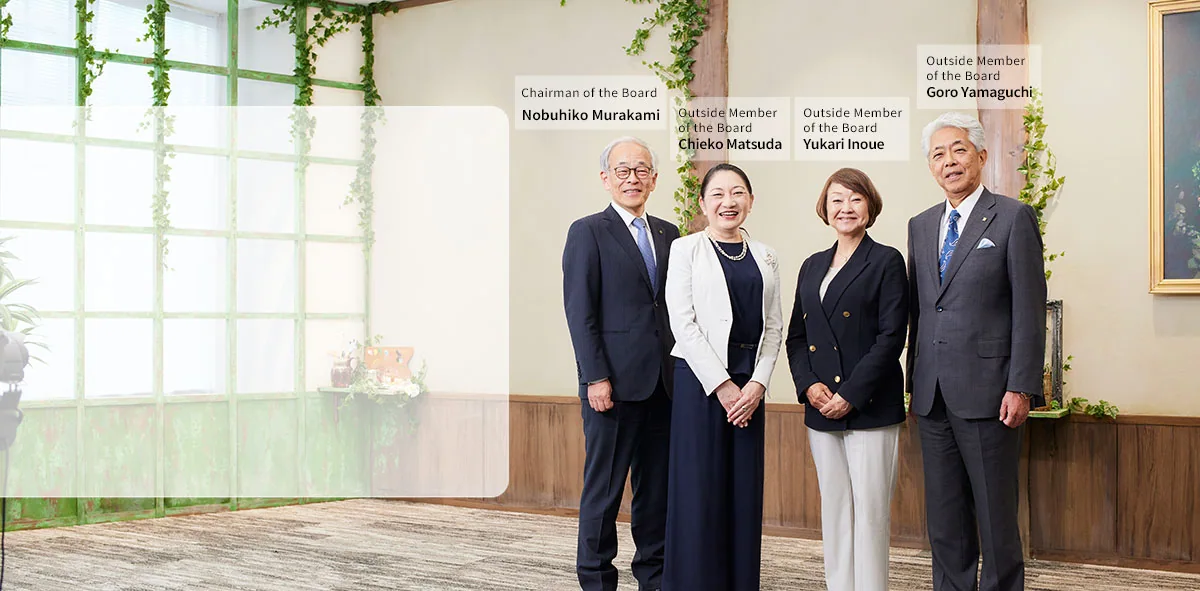
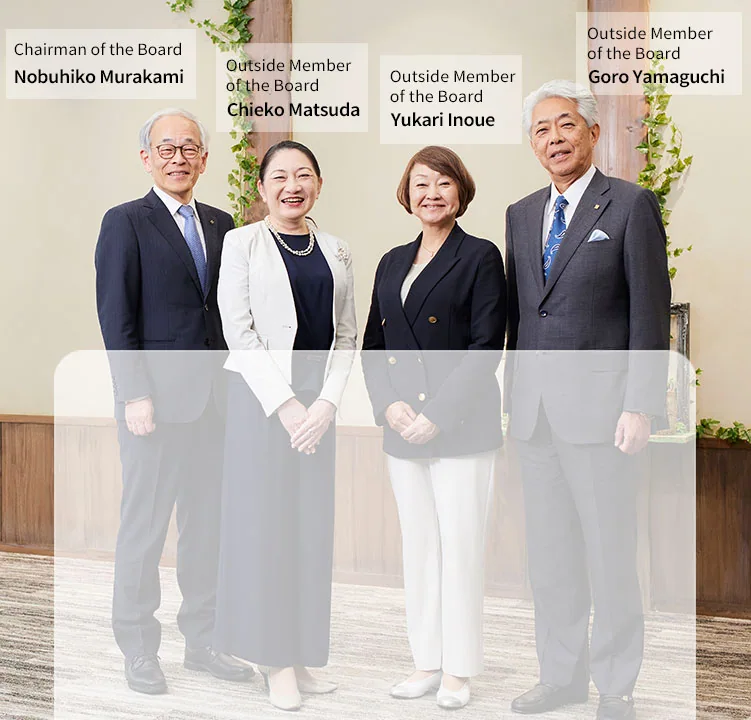
The Chairman of the Board and three Outside Members of the Board came together to discuss the strengths and challenges of Toyota Tsusho’s corporate governance, the effectiveness of Board of Directors meetings, the approach to dialogue with investors, and more.
The Strengths of Toyota Tsusho’s Corporate Governance and Its Future Challenges
I was a member of top management in a manufacturer for many years, so I firmly believe that companies, above all else, exist for their employees, working out in the field. Under the corporate system, companies exist for their shareholders, but if employees aren’t proud of their companies and don’t work hard, then companies won’t produce profits. They won’t make any forward progress at all. The results of this hard work and pride contribute to society and, ultimately, to shareholder returns. The same is true for governance. It’s important not to excessively cling to rules like the Corporate Governance Code but instead to autonomously strive to do what you think is true and just. Toyota Tsusho has a wonderful corporate culture in which people can engage in discussions freely and with open minds. I hope that everyone, from junior employees to veterans, actively engages in these discussions.
I think what Mr. Yamaguchi pointed out is important. Even with the new Corporate Governance Code, we don’t need people to get caught up in rules, but to think for themselves. I feel that Toyota Tsusho is the kind of company where those discussions can happen, and I hope the Group brings its distinctive traits to bear.
Toyota Tsusho excels when it comes to growth strategy. You can truly sense not only business growth but also personal growth. It’s been six years since I was appointed as an Outside Member of the Board, and I’ve seen with my own eyes how both the leaders and the people in the field have grown. I find everyone to be quite dependable. Because of my global management experience with foreign-owned companies, I see companies as public institutions, and I place great importance on the belief that they are responsible for contributing to the sustainable development of society. With that as our foundation, I think there are also three fundamental principles that each and every employee must embody in their day-to-day operations. The first is to maintain an “external focus.” That is, they must innovate and transform based on changes in the external environment, not just look at internal theory. The second is that they must be responsible enough to confidently explain our operations in the stern gaze of shareholders, and they must be resolutely decisive. The third is that they must propose and implement initiatives with the understanding that they could be reported on in the media. Toyota Tsusho shines when it comes to personal growth, so if these principles become firmly established, I am confident that it will become an even more robust organization.
The Functions of Board of
Directors Meetings
It’s important that Board of Directors meetings serve as a place to make ultimate decisions, but the quality of the process that leads to those decisions is also important. If members are scared of failure or risk and avoid making waves, simply making safe decisions instead, there won’t be any chance that the company will achieve significant growth and shape the future. We need to engage in thorough discussions through site tours, offsite meetings, and the like. If we are able to engage in bustling, lively discussions, then I think that even when presented with challenging projects, our Board of Directors will have a mindset of finding the challenge presented to be engaging, with everyone taking the risks involved in rising to the challenge. I think we’ll be able to provide powerful encouragement to company management. I hope to see more discussions like that at Toyota Tsusho.
While discussions within Board of Directors meetings are important, observing actual worksites and engaging in offsite discussions in advance produce better Board discussions. In that sense, as the Board’s chairman, I plan to actively create spaces and opportunities for deep discussions so that we can fully tap the knowledge of our Outside Members of the Board.
In Japan, Boards of Directors tend to be expected to serve in a consultant-like capacity as extensions of company execution functions, supplementing shortfalls in the field. However, execution and supervision should actually be clearly separated. Toyota Tsusho’s Board of Directors meetings are functioning effectively, and discussions are focused on the essential agenda items that the Company needs to address, thanks to your leadership as chairman. However, I do think that the meetings could be improved by allocating more time for strategic discussions.
Messages to Investors
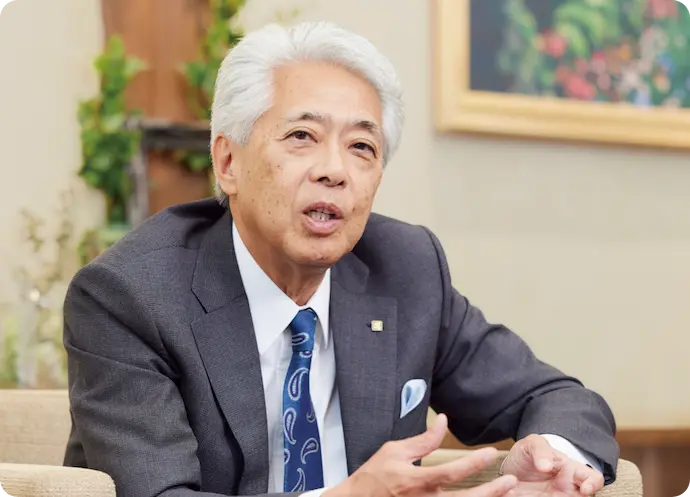
I really hope that investors don’t try to evaluate the true value of the company just by comparing published financial data and surface-level indicators like ROE alone. Behind those numbers are people pouring in their blood, sweat, and tears. To understand Toyota Tsusho’s true latent potential, I hope they come to the company and have honest, one-on-one talks with not only executives but also, if possible, with employees in the field. Looking at it from that perspective, the energy that employees put into taking on the challenges of creating new value, in this free and unfettered corporate culture, is Toyota Tsusho’s greatest appeal. It’s the driving force behind the company’s sustainable growth.
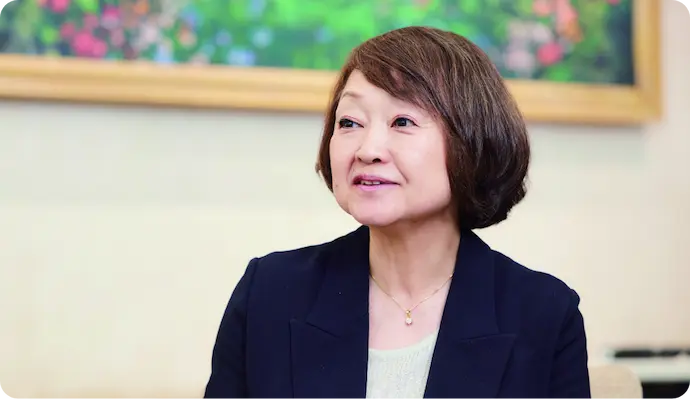
I think this resonates with what you all have said, but I think that one of Toyota Tsusho’s challenges going forward will be to communicate the company’s effective strengths and potential to investors in a clear and easy-to-understand way. I will do my part in helping enrich the company’s IR activities so that Toyota Tsusho’s appeal comes across even more clearly.
Thank you all for your invaluable insights today. I’ve listened closely to the issues you have pointed out and the expectations you have shared, and the entire Board of Directors will do its utmost to further enhance the corporate value of Toyota Tsusho and engage in an even higher level of dialogue with stakeholders.